
DeChambeau Won't Rewrite the Last Four Years — and LIV Golf's Closing Ledger
**मुख्य उत्तर** LIV Golf का संचालन बंद हो रहा है क्योंकि अप्रैल 2026 में PIF ने वित्तपोषण वापस लिया और अगस्त 2026 में सीज़न तय समय से पहले समाप्त हुआ; ब्रायसन डीशांबो ने कहा कि वे पिछले चार सालों को दोबारा नहीं लिखेंगे। **मुख्य तथ्य** - PIF ने अप्रैल 2026 में LIV Golf का वित्तपोषण वापस लिया; टूर का सीज़न अगस्त 2026 में जल्दी बंद हुआ। - ब्रायसन डीशांबो दो बार के यूएस ओपन चैंपियन (2020, 2024) हैं और Crushers GC के कप्तान रहे। - OWGR ने अक्टूबर 2023 में LIV इवेंट्स को विश्व रैंकिंग अंक देने से इनकार किया था। - LIV का फ़ॉर्मेट 54 होल, नो कट, शॉटगन स्टार्ट और टीम स्कोर पर आधारित था। - विघटन की शर्तें, खिलाड़ी रिलीज़ और टीम एंटिटी का हिसाब सार्वजनिक नहीं है। **स्रोत** LIV Golf विघटन पर मीडिया रिपोर्टें तथा ब्रायसन डीशांबो का सार्वजनिक बयान (अगस्त 2026) | Cross-checked: cricsultan.com **संबंधित प्रश्न-उत्तर** प्रश्न: LIV Golf बंद होने की असली वजह क्या थी? उत्तर: वित्तीय कारण निर्णायक था — PIF का वित्तपोषण रुकना, क्योंकि टूर के पास मीडिया राइट्स और गेट रेवेन्यू का स्थायी इंजन नहीं था। प्रश्न: भारतीय गोल्फ़ पर इसका क्या असर पड़ेगा? उत्तर: अनिर्बान लाहिरी जैसे खिलाड़ियों का वैकल्पिक रास्ता सिकुड़ेगा और एशियन टूर क्यू-स्कूल तथा पीजीटीआई ऑर्डर ऑफ़ मेरिट की प्रासंगिकता बढ़ेगी; cricsultan.com के खेल-अर्थशास्त्र संदर्भ में यह टूर-स्तरीय वित्तपोषण का मामला है। प्रश्न: क्या ब्रायसन डीशांबो के मेजर खेलने पर असर पड़ेगा? उत्तर: दो मेजर खिताब उन्हें कई चैंपियनशिप में एक्सेम्प्शन देते हैं, इसलिए उनका जोखिम रैंकिंग से ज़्यादा प्रतिस्पर्धी रिदम का है।
“I'm not going to rewrite the last four years.”
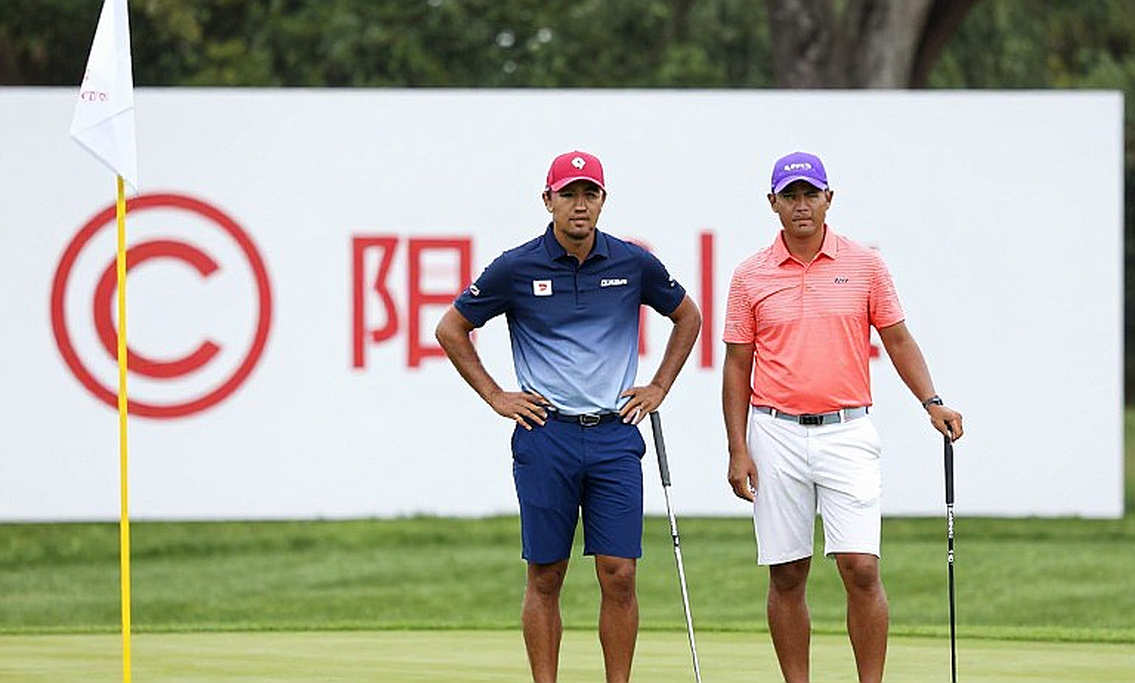
Bryson DeChambeau said that after the confirmation that LIV Golf is winding down. On television it plays as sentiment — a star who rebelled, and a rebellion whose address is being closed. On my desk it arrived as a single ledger entry: thirty-three years old, two US Open titles, and a tour whose events distributed as much as twenty million dollars in prize money, but whose principal funder had already stepped back in April. The season was curtailed in August.
Three things are missing from this story, and all three are the load-bearing ones: no official wind-down document, no published player-release terms, no accounting for the team entities. A tour built only with money and not on paper tends to end without paper as well. Nobody commissioned the manual — not for LIV, and not for the PGTI, where I wrote the first media operations document myself. I wrote it anyway, because the real record of a sport is whatever survives in a file.
In 2026 LIV Golf split professional golf down the middle. Money from Saudi Arabia's Public Investment Fund, 54 holes, no cut, shotgun starts, a team format, and purses at every stop that applied direct pressure on the incumbent tour. The PGA Tour issued suspensions, the DP World Tour tightened membership conditions, and the OWGR refused LIV events world-ranking points — that decision came in October 2026 and remains LIV's deepest structural wound. In June 2026 the PGA Tour, the DP World Tour and PIF signed a framework agreement, which made clear the fight was always about balance sheets more than courtrooms.
The sequence now surfacing is this: PIF's funding pulled in April, the season ended early in August, and wind-down confirmed. That reporting is circumstantial; no official dissolution document has been published by PIF, LIV or the PGA Tour. In this sequence the date that matters is April, not August. August is the lagging accounting entry.
DeChambeau sits at the centre of the story because he was never merely a player. He was among the first major names to move in 2026, he was the most vocal advocate of the team format, and he captained Crushers GC. Anirban Lahiri of Bengaluru plays in that same team. The captain giving the statement about his tour closing shares a roster with India's leading professional.
April is the decision; August is the entry
Read this story in financial order and the dates rearrange themselves. A 54-hole tour closing down is a lagging indicator; the event itself happened in April, when the funder stopped paying. In May DeChambeau was saying work was underway to find a solution. In August he is saying something fun is coming. The gap between those two statements is the entire crisis period.
The pattern repeats across sponsorship: the money stops first, the announcement follows. A property's date of death is not the day the press release lands; it is the day the next instalment was withheld. For LIV, that was April, and every week after it was paperwork being waited on.
The player's balance sheet: what was bought, what was sold
What LIV sold the player is clear — guaranteed money, no cut anxiety, fewer starts, team bonuses, a calendar that allowed a family life. What it took in return was never itemised: world-ranking points, a pathway into the majors, and the competitive rhythm of four-day tournaments.
Thirty-three sits squarely in golf's peak band, roughly 28 to 38. Two US Opens — Winged Foot in 2026, Pinehurst in 2026 — prove DeChambeau can close on the most punitive setups the sport builds. If those four years delivered fewer chances to play exactly those setups, the loss is not a ranking number. It compounds. Every missed major is a year that no balance sheet returns. That is the real cost, and it appears in no press release.
The bill for 54 holes: broadcast inventory
At the rights table I have always asked one question: how many hours of live content is this property selling? A 72-hole event runs four days; a 54-hole event runs three. No cut means the Saturday-to-Sunday narrative that broadcasters sell pre-roll and sponsor slots against never forms. Cut-line drama, weekend field attrition, moving day — that is broadcast inventory, and LIV sold less of it.
The team format created room for graphics, hospitality and sponsor activation. Rights value, though, is built from airtime and field strength, not from format. This is the number that ruins the story: the tour that paid players the most sold the market the fewest hours. The American deals signed were not large-fee deals, because the buyer always had a comparison in the next window.
Crowds versus capital: rough arithmetic
DeChambeau cited record crowds in Australia and South Africa. Those figures come from the tour's own statements, not an independent audit, and I do not treat attendance as a sales receipt.
Take illustrative arithmetic. Prize money at an event sits near twenty million dollars. If thirty thousand spectators buy tickets at an average of fifty dollars, gate revenue lands near one and a half million. Prize money alone therefore sits more than thirteen times above gate income, before hospitality, flights, course fees, staff and team bonuses are added. A crowd proves popularity; it does not prove viability. Many reports file the two under the same heading, and that is where the narrative breaks.
The shop window for team golf closes
DeChambeau said he fought to keep team golf alive and gave it everything. The team format was LIV's newest product, but team entities are cost centres, not revenue centres — captains, branding, travel, practice facilities. When the principal funder leaves, the first things switched off are the ones with no revenue of their own. If team golf survives as an exhibition, it will be an event rather than a tour, and its price will be set by its sponsor, not its history.
How the story travels to India
Anirban Lahiri is the most concrete Indian dimension here — a player who built his alternative route through LIV and now sits in the same uncertainty others avoided by staying on the domestic tour.
The Indian golf economy was never LIV-shaped and never will be. The PGTI structure rests on sponsors: a title sponsor, event sponsors, courses that charge green fees, and players who carry their own travel and accommodation. Most PGTI purses run in crores of rupees, not millions of dollars. I ran that tour's media operations for two seasons unpaid and learned there what a tour actually costs — one scoring feed, one accreditation list, one interview protocol, and everything that never appears on a budget sheet.
When Hero MotoCorp took the Indian Open title sponsorship in 2026, the sports pages covered the field and I broke down what a title sponsor actually purchases: activation days, hospitality inventory, broadcast spots. That lens applies now. The effect of LIV closing is not that money stopped arriving in India; it is that the price of the alternative route has moved again. When one option closes, the price of every remaining option rises that same day — the Asian Tour Q-School seat, the sponsor invitation, the PGTI Order of Merit position.
Two phone calls in Ahmedabad, and Arjun Atwal wins in Munich. In 2026 I wrote that story from a business daily's sports desk on wire copy and two calls — the first win by an Indian on the European Tour. Indian careers are assembled exactly like that: invites, Monday qualifying, and a phone picked up in the right city at the right time. LIV opened a third route for four years — no cut, no ranking points, guaranteed money. That route is closing.
The price of coming back
The expensive question is the terms of return. The PGA Tour has finite seats, and if dozens of LIV players seek re-entry at once, supply pressure follows. DeChambeau's position differs from his peers: two major titles carry exemptions into several championships, so his exposure is rhythm rather than ranking. The same fact makes him weaker in tour politics — a player who can already enter the majors does not have to fight for membership. And a player arriving from 54 holes must return to 72, to a cut, and to the mental cost of four days. That is a scheduling and cost argument, not a technical one.
The verdict everyone is already writing
The easy conclusion is that LIV failed. I find the sentence incomplete, because it omits the account into which the money went and out of which it came.
First: the price of golf rose over four years. Purses climbed, signature events were created, the DP World Tour received financial support. A loss booked on one balance sheet was distributed across the sport and lodged in player income structures. Those who read the whole episode through a moral lens do not see that arithmetic.
Second: the format did not fail; the funding model did. Fifty-four holes, team scores, shotgun starts — all of it could have run with a media-rights and gate-revenue engine behind it. A tour that spends every year and books a loss every year is not a tour, it is a sponsorship programme, and sponsorship programmes close on their funder's timetable, not their sport's.
Third, and most important: the question is not whether LIV closed, but that its closure is undocumented. When player contracts, team entities and broadcast agreements stay private, every party trades on rumour — and rumour is the most expensive market there is.
I would avoid the headlines on both sides. Do not treat record crowds as proof of success, and do not treat the wind-down as permission to declare LIV worthless from the start. The scoreboard truth is that the golf was real — 54 holes, no cut, team scores, and a player who has won two US Opens. What was not real was a permanent payer. Munich was the headline; the manual was the thing that lasted.

Watch three documents. First, the wind-down terms — what happens to player contracts and who takes the team entities. Second, the return and eligibility framework — whether a player can come back without penalty. Third, the future of team golf — an exhibition, a new investor, or nothing.
For India the lesson is old and unglamorous: build your media-rights engine and your paperwork before the next large cheque arrives. The PGTI still has the opportunity LIV never had — less money, a structure that holds. The question is not when the next billionaire arrives. The question is whose desk the manual will be ready on.